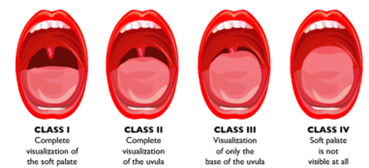
FMGE Solutions-Best MIC Coaching / FMG Coaching / NEXT Coaching Instiitute

- A 30-year-old patient with acute kidney injury is detected to have serum potassium of 7.5 meq/L. Which of the following is the most effective intervention to lower elevated serum potassium?
- 10 units of regular insulin in 50 ml of 50% dextrose infusion
- Salbutamol 5 mg nebulization diluted in 5 ml normal saline
- 10 ml of 10% calcium gluconate IV over 10 minutes with cardiac monitoring
- 4 g of Patiromer diluted in 100 ml DW via NG tube
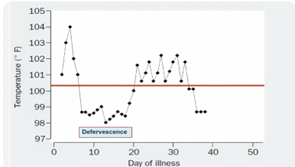
- Following is a graphic representation of a farmer admitted to the medicine ward with fever with Jaundice. What could be the possible diagnosis?
- Cerebral malaria
- Brucellosis
- Leptospirosis
- Typhoid
- 60-year-old smoker with COPD GOLD stage II is started long term oxygen therapy at 6L/min. The nurse notes pulse 90/min, BP 140 / 100 mm Hg, RR 16/min, sp02= 98%. What should be the priority nursing action?
- Ask technician to urgently procure BiPAP machine for NIV
- Reduce oxygen flow to 2L/min
- Give iv Hydrocortisone 100 mg and nebulization with Formoterol on physician orders
- Encourage patient do deep diaphragmatic breathing
- Elevated jugular venous pressure is most commonly caused by which of the following?
- Hypervolemia
- Fluid overload
- Hypovolemia
- Dehydration
- A nurse is caring for a GBS patient on a mechanical ventilator. Mode selected is Assisted controlled mechanical ventilation. ABG shows pH = 7.50, pCO2 = 30 mmHg and HCO3 = 20 meq/L. Which laboratory value is most likely to be observed in this condition?
- Magnesium level = 1.8 mg/dL
- Sodium level = 145 mEq/L
- Potassium level = 3.0 mEq/L
- Phosphate level = 3.0 mg/dL
- A patient is prescribed nitroglycerine infusion at 15 mcg/ min. The solution available is 50 mg nitroglycerine in 500 mL D5W. What should be correct infusion rate in mL/ hr?
- 99 mL/hr
- 19 mL/hr
- 90 mL/hr
- 9 mL/hr
- 26-year-old female on paroxetine presents with inability to breath during a panic attack. Her ABG report shows:
pH = 7.55
PaCO2 = 25 mmHg
HCO3- = 22 mEq/L
Which of the following is correct about this patient- Respiratory alkalosis, partially compensated
- Respiratory alkalosis, uncompensated
- Respiratory alkalosis, fully compensated
- Respiratory alkalosis with metabolic alkalosis
- A patient is suspected to have tuberculosis and the physician orders a Mantoux test. The nurse prepares 0.1 mL of purified protein derivative. By which route should it be administered?
- Intradermal
- Subcutaneous
- Intramuscular
- Intravenous
- Cushing’s triad, a late sign of increased intracranial pressure, includes which of the following?
- Widened pulse pressure, tachycardia, irregular respirations
- Hypertension, bradycardia, irregular respirations
- Hypotension, tachypnea, bounding pulse
- Hypertension, tachycardia, rapid respirations
- A patient has a fever of 101°F and is prescribed IV Meropenem. What should be the nurse’s priority action before administration?
- Administer antibiotics immediately
- Give antipyretic before starting antibiotics
- Obtain culture samples before giving the first dose of Meropenem
- Start IV fluids and observe the patient’s response of antibiotics
- A patient undergoing chemotherapy presents with Haemoglobin 8.6 g/dL and platelet count 18 × 10³/µL. Which parameter requires immediate monitoring and intervention?
- Thrombocytopenia with platelet count 18 × 10³/µL
- Hemoglobin 8.6 g/dL
- White blood cell counts within normal limits
- Serum electrolytes
- A patient undergoing haemodialysis develops drop in blood pressure from 150/100 mmHg to 90/60 mmHg, accompanied by tachycardia. What should be the nurse’s first immediate action?
- Administer IV dopamine
- Inform physician
- Reduce ultrafiltration and place patient in Trendelenburg position
- Administer IV fluids (normal saline/albumin)
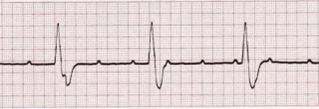
- A 65-year-old patient with a history of diabetes mellitus and coronary artery disease presents with dizziness and near syncope. ECG shows the following, what is the most appropriate management?
- Amiodarone
- Transcutaneous pacemaker insertion
- Anticoagulant therapy with continuous observation
- Atropine
- A patient with rheumatoid arthritis is presented with a history of gastric ulcer. Which of the following drugs is most appropriate for this patient?
- Etoricoxib
- Naloxone
- Acetaminophen
- Ibuprofen
- Which of the following is not typically seen in a construction worker with heat stroke?
- Sweating
- Mydriasis
- Rapid pulse
- Hot dry skin
- A patient is prescribed an inhaler with 200 puffs. The order is 2 puffs every 6 hours, for how many days will one inhaler last?
- 20 days
- 25 days
- 28 days
- 30 days
- Which of the following is not correct about Diabetes insipidus?
- Orthostatic hypotension
- Polydipsia with polyuria
- Relative hypernatremia
- Isosthenuria
- Nurse notices that a DVT patient receiving heparin has an aPTT of 95 seconds. What is the most appropriate next action?
- Hold the next dose of heparin
- Check for evidence of blood loss from nose, in urine and in stool
- Continue the same heparin dose
- Administer vitamin K on physician orders
- A COPD patient develops an exacerbation due to poor AQI. ABG shows pH=7.2, pCO2 = 60 mm Hg and HCO3= 28 meq/L. Which intervention is the most appropriate for this case?
- Start NIV
- Administer high flow oxygen with CPAP
- Administer high flow oxygen with Venti mask
- Start IV hydrocortisone with nebulization with Foracort
- Before starting dialysis a patient in AKI is found to have a potassium level rises to 6.8 meq/L. What is the immediate management?
- Administer calcium gluconate IV
- Start insulin drip in 25-50% dextrose
- Administer 40 mg furosemide
- Restrict IV fluids
- Which of the following is the most common side effect of nitroglycerin?
- Bradycardia
- Headache
- Nausea
- Palpitations
- A patient is suspected of having acute pancreatitis, which laboratory values are most commonly elevated?
- Amylase and lipase
- Serum bilirubin
- ALT and AST
- Creatinine
- A patient’s arterial blood gas shows pH 7.50, PaCO2 28 mmHg, HCO3– 24 mEq/L. Which of the following is the most likely cause?
- Acute exacerbation of COPD
- Pulmonary embolism
- Status asthmaticus
- Obesity hypoventilation syndrome
- A patient with CKD presents with hyponatremia. What is the most appropriate initial nursing intervention?
- Administer 0.9% NS
- Restrict fluids
- Administer 3% hypertonic saline
- Start diuretics
- A patient with central diabetes insipidus receives vasopressin. What is the expected effect on urine?
- Urine volume remains high
- Urine specific gravity rises
- Urine volume does not change
- Urine specific gravity lowers
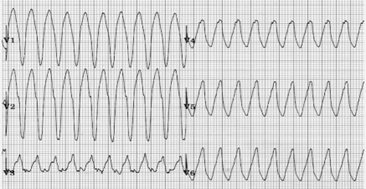
- A patient is on continuous ECG monitoring while receiving treatment for NSTEMI. Based on the rhythm displayed on the ECG monitor, which dysrhythmia is the patient experiencing?
- Ventricular fibrillation
- Torsades de pointes
- Polymorphic Ventricular tachycardia
- Monomorphic Ventricular tachycardia
- Name the device shown below and medical condition used for?
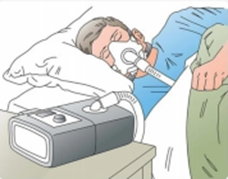
- CPAP for OSA
- Bi-PAP for OSA
- CPAP for high altitude pulmonary oedema
- Bi-PAP for high altitude pulmonary oedema
- A patient with jaundice and tremors presents with the following finding in the eye. What will be nursing diagnosis?
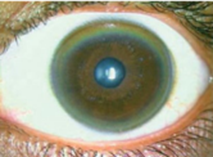
- Huntington’s chorea
- Wilson’s disease
- Heavy metal poisoning
- Sydenham’s chorea
- Three days after being initiated on a certain drug, a patient developed the following lesions. Which of the following drugs was likely started for this patient?
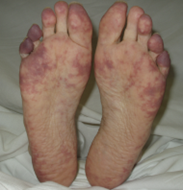
- Warfarin
- Aspirin
- Atorvastatin
- Levofloxacin
- What does I.P in the following indicate?
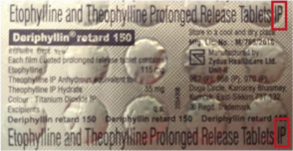
- Intellectual property
- Indian pharmacopoeia
- Industrial production
- International pharmaceuticals
- A 20-year-old man is brought to the emergency following an episode of syncope during his morning walk. His blood pressure is 80/60 mmHg. His present ECG is given below. Which is the most appropriate treatment for the patient?
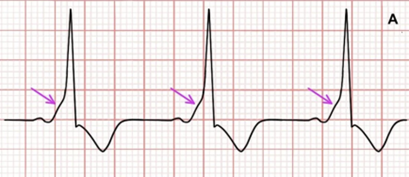
- Lignocaine
- Diazoxide
- DC cardioversion
- Radiofrequency ablation
- A 20-year-old woman has complaints of reduced hearing on her right side. You perform a diagnostic test using the following instrument. What is the name of this instrument?
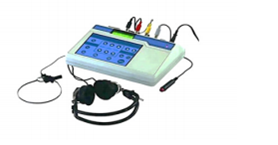
- Digital audiometer
- Tympanometer
- Rhinomanometer
- BERA
- What is the most likely diagnosis for the below given ECG image?
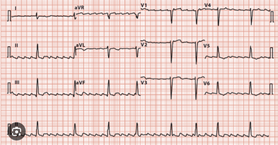
- Atrial Flutter
- Atrial Fibrillation
- Ventricular Fibrillation
- None of the above
- What is the name of the osteoarthritis deformity seen in the image?
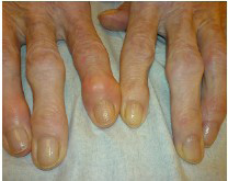
- Dupuytren’s contracture
- Swan neck deformity
- Heberden’s nodes
- Boutonniere deformity
- Patient with cardiomyopathy and heart failure findings is on digoxin. He latest ECG is shown below. Physician is likely to order which drug for this patient?
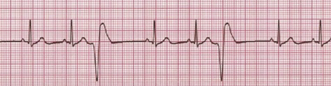
- Lignocaine
- Sotalol
- Quinidine
- Amiodarone
- What is the likely diagnosis of this case?
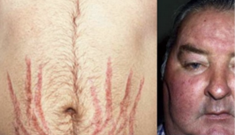
- Cushing syndrome
- PCOD
- Acromegaly
- Conn Syndrome
- The four dysrhythmias ECGs are given below. Which of the following can lead to development of embolic stroke?
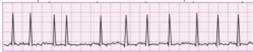


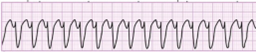
- A nursing student is using coffee and energy drinks to stay awake. He comes to the ER with fluttering feeling in the chest. What is the ECG rhythm shown
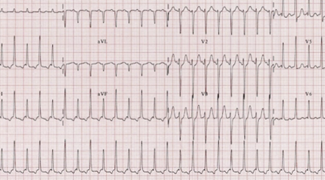
- Atrial flutter
- PSVT
- Sinus rhythm with premature ventricular contractions
- Ventricular tachycardia
- You are evaluating a patient post a neurosurgical procedure. The patient opens her eyes in response to a loud voice, localizes pain and is confused and disoriented. What is the GCS score of this patient?
- E3 M5 V4
- E3 M6 V5
- E4 M4 V5
- E3 M5 V5
- Match the following:
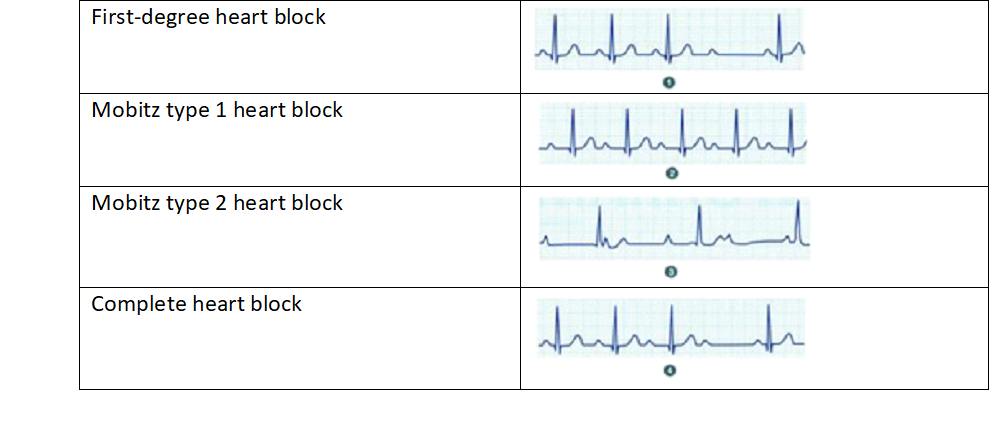
- 1-a, 2-c, 3-b, 4-d
- 1-c, 2-a, 3-d, 4-b
- 1-b, 2-d, 3-c, 4-a
- 1-d, 2-b, 3-a, 4-c
- In a normal ECG obtained from a patient, a biphasic P wave maybe seen in which of the following lead (s)?
- Leads II and V2
- Leads II and V1
- Lead V1
- Lead V5
- Based on the provided ECG readings, for which patient is likely to be on digoxin?
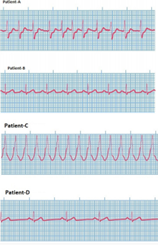
- Patient A
- Patient B
- Patient C
- Patient D
- An elderly woman is rushed to the ER following an episode of syncope. Her caretaker reports that the patient had multiple episodes of loose stools and vomiting for the past 2 days. Work up is shown below. What is the next best step in the management of this patient?
Serum sodium: 130 mEq/L
Serum potassium: 2.8mEq/L
Serum chloride: 100 mEq/L
Blood urea nitrogen creatinine ratio: 30- Asses BP, give NS with KCL 40 meq/L
- Asses ECG and give KCL via central line 20meq/ hr
- Asses BP and give 3% saline bolus over 30 minutes
- Asses ECG and give KCL via peripheral line 40 meq/Hr
- A 37-year-old man, with no known medical illness, came for a routine medical check-up. His chest radiograph is presented to you. Identify the incorrect statement with respect to the X-ray shown below.
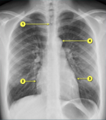
- The structure marked as number 2 is right ventricular border
- The structure marked as 1 is the trachea
- The structure marked as 3 is the left ventricular border
- The structure marked as 4 is the aortic arch
- A nurse is caring for a patient diagnosed with rheumatoid arthritis. Which assessment finding does the nurse expect to assess?
- Asymmetrical pain in the large weight bearing joints
- Low back pain and stiffness that is worse in the morning
- Pain, swelling and redness of the great toe
- Symmetrical pain and swelling in the small joints of the hands
- A 48-year-old female patient with history of T2DM presents to the clinic with complaints of polyuria, polydipsia and weight- loss over the past month. On physical examination, she is alert and oriented but appears dehydrated. Her blood pressure is 140/90 mmHg, heart rate is 110 bpm, respiratory rate is 16/min and temperature 37.8°C (100°F). Labs show elevated fasting blood glucose levels and HbA1c levels. The nurse suspects diabetic ketoacidosis (DKA). What is the priority nursing intervention?
- Administer intravenous insulin infusion
- Start an intravenous line and obtain blood for laboratory tests
- Assess the patient’s urine output and ketone levels
- Administer intravenous fluids to correct dehydration
- Which of the following is not seen in cystic fibrosis?
- Meconium ileus
- Biliary atresia
- Bleeding diathesis
- Nasal polyposis
- A 45-year-old female patient has stiffness in the joints of the hands for the past 6 years. On examination, the following deformity is noted. Serology is positive for anti-CCP antibodies. Which of the following are associated with this condition?
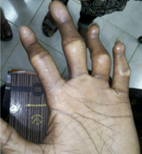
1) Pleural effusion
2) Anaemia of chronic disease
3) Swan neck deformity and Boutonniere deformity
4) Uveitis
5) Seizures
- 1, 2, 5
- 1, 3, 4, 5
- 1, 2, 3
- 4, 5
- What is the most common neurological manifestation seen in patients with systemic lupus erythematosus?
- Seizures
- Depression
- Cognitive impairment
- Polyneuropathy
- Which of the following statements is false about Raynaud’s phenomenon?
- Secondary Raynaud’s is associated with more severe symptoms
- Secondary Raynaud’s develops predominantly after the age of 30 years
- Primary Raynaud’s is usually ANA negative
- Primary Raynaud’s is associated with digital tissue necrosis and ulcers
- A 23-year-old woman presents to the emergency department with seizures. Her parents said this started 15 minutes back and has been Initial resuscitative measures are taken and she is given lorazepam. However, her seizures didn’t subside. Which antiepileptic drug is indicated now?
- Propofol
- Phenytoin
- Phenobarbitone
- Pregabalin
- A 50-year-old woman complains of numbness of her hands, generalized weakness and easy fatigability. She is a vegetarian. She looks very pale and her peripheral smear reveals macrocytic hypochromic If untreated, she is at risk of developing which of the following conditions?
- Proprioceptive loss
- Stabbing pain
- Temperature loss
- Burning pain
- A patient with SIADH is being treated with water restriction. Which findings indicate that the treatment is effective?
- Increased urine output, decreased serum sodium levels and elevated urine specific gravity
- Increased urine output, increased serum sodium levels and reduced urine specific gravity
- Reduced urine output, increased serum sodium levels and reduced urine specific gravity
- Reduced urine output, decreased serum sodium levels and elevated urine specific gravity
- Which patient is at the highest risk for developing aspiration pneumonia?
- An infant who recently underwent repair of a tracheoesophageal defect
- An alert 10-year-old with cystic fibrosis
- A 50-year-old with fractured ribs and a broken leg from a motor vehicle accident (MVA)
- A confused 75-year-old with history of a cerebrovascular accident VA)
- How should the nurse interpret the finding that a patient with bronchiectasis has expectorated three cupfuls of foul-smelling, mucopurulent secretions in the past 24 hours?
- A secondary infection has developed
- The disease process is improving
- The patient is displaying typical symptoms of the condition
- Chest physical therapy requires adjustment to meet the patient’s needs
- Acute Respiratory Distress Syndrome can develop due to direct lung injury or indirectly through systemic inflammatory response syndrome (SIRS). The nurse understands that ARDS is most commonly associated with which of the following conditions?
- Sepsis
- Oxygen toxicity
- Prolonged hypotension
- Cardiopulmonary bypass
- Which positioning is recommended for management of patients with paO2 / Fio2 ratio of 300 with CXR showing bilateral infiltrates?
- Supine
- Reverse-Trendelenburg
- Trendelenburg
- Prone
- AKIN and RIFLE criteria are used to classify:
- Acute kidney injury
- Chronic renal failure
- Acute glomerulonephritis
- Nephrotic syndrome
- What causes the glomerular damage seen in glomerulonephritis?
- Proliferation of microorganisms within the glomeruli
- Toxins produced by bacteria damaging the glomeruli
- Deposition of immune complexes in the glomeruli
- Breakdown of red blood cells circulating through the glomeruli
- A patient with GBS is receiving plasmapheresis. What is the purpose of this treatment?
- Reduce inflammation
- Remove autoantibodies
- Increase blood volume
- Correct electrolyte imbalances
- A patient develops dyspnea during a blood transfusion. What complication should the nurse suspect?
- Hypoglycemia
- Transfusion-related acute lung injury (TRALI)
- Hypokalemia
- Wound infection
- A 70-year-old lady with Parkinsonism suffers from aspiration pneumonia, with 3 episodes for the past 6 months. X ray shows bibasilar bronchiectasis. Moderate oropharyngeal dysphagia is present and had a poor cough reflex. What is the best appropriate step for long- term prevention of recurrent aspiration pneumonia?
- High frequency oscillatory chest therapy
- PEG gastrostomy tube insertion
- Nebulization with N-acetyl cysteine to reduce secretions
- Azithromycin for antibacterial prophylaxis and prokinetic effect
- A patient with low-grade fever and weight loss has poor excursion on the right side of the chest with decreased fremitus, flatness to percussion and decreased breath sounds all on the right. The trachea is deviated to the left. Which of the following is the most likely diagnosis?
- Pleural effusion
- Pneumothorax
- Chronic obstructive lung disease
- Consolidated pneumonia
- Which electrolyte imbalance increases the risk of digoxin toxicity?
- Hyperkalemia
- Hypokalemia
- Hypernatremia
- Hypocalcemia
- The murmur of mitral stenosis corresponds to which part of the ECG?
- P wave
- ST segment
- QRS complex
- T wave
- Which of these tumor markers is elevated in carcinoma breast?
- CA-125
- CA-19-9
- CA-15-3
- CA-72-4
- An adult patient undergoing dialysis asks if he can take insulin before the dialysis treatment. Which statement about insulin and dialysis should the nurse include in the response?
- Insulin levels are not reduced by hemodialysis.
- Insulin enhances the effects of dialysis.
- Dialysis destroys insulin.
- Dialysis stimulates the production of insulin.
- A 47-year-old patient has Addison’s disease; the nurse would expect to find which of the following during the nursing assessment?
- A supraclavicular fat pad
- A puffy face
- Low blood pressure
- Ecchymotic areas
- An elderly patient on a vegetarian diet presenting with easy fatigability and pallor was Peripheral smear showed findings of macrocytic anemia. Investigations reveal elevated serum homocysteine levels and normal serum methylmalonic acid levels. What is the probable cause of anemia in this patient?
- Vitamin B9 deficiency
- Vitamin B12 deficiency
- Vitamin B1 deficiency
- Vitamin B6 deficiency
- A nurse is supervising a student nurse providing tracheostomy care to a patient. Which action by the student should prompt supervising nurse to intervene?
- The student nurse cuts the dressing to fit around the tracheostomy tube
- The student nurse uses sterile technique while cleaning around the stoma
- The student nurse applies a new tracheostomy dressing under the flange
- The student nurse removes the inner cannula for cleaning
- During the recording of the EEG, a resting and awake person was instructed to close his eyes and then open them. The dominant wave which decreases on opening the eyes is:
- Alpha
- Beta
- Theta
- Delta
- A resident doctor ordered procalcitonin for a patient with suspected ventilator-associated pneumonia and was on empirical antibiotic therapy. What is the role of procalcitonin?
- Differentiate fungal and bacterial causes
- Diagnose VAP
- To decide duration of antibiotics
- To decide the empirical therapy
- A 46-year-old man with a history of type 2 Diabetes Mellitus presents with a complicated UTI, urinalysis shows more than 40 WBCs. He is hypotensive and not responding to IV fluids. What would be the treatment of choice?
- Meropenem
- Amoxicillin-Clavulanate
- Ceftriaxone
- Nitrofurantoin
- Which of the following is the drug of choice for management of digoxin induced toxicity. Heart rate is 38/min with BP 70/50 mmHg with altered mentation?
- Atropine
- Digiband
- Digitoxin
- Lignocaine
- A 52-year-old man presents with acute onset of severe pain, redness, and swelling in the first metatarsophalangeal joint. Which of the following is the drug of choice for the management of this acute gout attack?
- Xanthine oxidase inhibitor
- Microtubule polymerization inhibitor
- COX -1 inhibitor
- Uricosuric drug
- Which of the following drugs can cause black discoloration of the tongue?
- Phenytoin
- Sucralfate
- Valproate
- Lithium
- A 55-year-old man with type 2 diabetes mellitus is started on an SGLT2 inhibitor for improved glycemic control. Which of the following adverse effects is least likely to be associated with this drug class?
- Euglycemic ketoacidosis
- Increased risk of genital mycotic infections
- Hypoglycaemia when used as monotherapy
- Increased risk of urinary tract infections
- The following patch is used for which of the following patients?
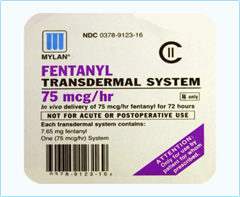
- 10- year- old scheduled for bone marrow biopsy
- 40 -year old with breast cancer with spine metastasis
- 65 – year old undergone total knee replacement
- 85 – year old man with chronic severe osteoarthritis knee pain, already on high – dose oral opioids
- The 5 – year old child consumed two bottles of strawberry flavoured paracetamol and became unconscious. Which of the following is toxic product responsible?
- N- acetyl – p benzoquinone imine
- N – acetyl – cysteine
- Glutathione
- Glutathione sulphate
- You are managing a patient with reversible airway disease and have prescribed the following pressurized metered dose inhaler for management of acute exacerbations due to poor AQI. Which of the following is not a side effect of this drug?
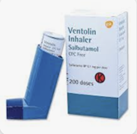
- Hypoglycaemia
- Tachyphylaxis
- Hypokalemia
- Throat pain
- 30-year-old patient had a fall from entire flight of stairs and MRI spine shows burst fracture of T6 vertebra. Which will be seen in this case?
- Spastic weakness of legs and urge incontinence
- Flaccid weakness of legs and overflow incontinence
- Impaired diaphragmatic function and CO2 retention
- Low BP and high Heart rate
- Marathon runner presents with acute onset hyponatremia (Serum Na= 122 meq/L) with dehydration and disorientation. He develops one episode that was managed with iv lorazepam. Which is correct management of this case?
- Slow correction of hyponatremia with 3% saline at 6 meq/day
- Fast correction of hyponatremia with 0.45% saline
- Slow correction of hyponatremia with 0.45% saline at 6 meq/day
- Fast correction of hyponatremia with 3% saline bolus
- 30-year-old man presents with headache and nuchal rigidity. On examination nuchal rigidity and Brudzinski sign is present. NCCT head shows small hydrocephalus with no evidence of bleeding. Nurse will anticipate which condition
- Pyogenic Meningitis
- Viral meningitis
- Subdural haemorrhage
- Subarachnoid hemorrhage
- Patient had spinal cord injury at T4. Which of the following is seen?
- Flaccidity of upper limb
- Hyperreflexia and spasticity of upper limbs
- Reduced diaphragmatic paralysis and requirement of ventilator support
- Efficient cough and independent use of upper limbs
- A 30-year-old patient in the ICU has been receiving large volumes of 0.9% Normal Saline for resuscitation. After 48 hours, the nurse notices rising chloride levels on the lab report. Which complication should the nurse most closely monitor for?
- Metabolic alkalosis due to excess bicarbonate
- Hyperchloremic metabolic acidosis
- Respiratory alkalosis due to hypoventilation
- Hyponatremia with cerebral oedema
- 60-year-old smoker comes with central chest pain radiating to left shoulder. ECG is shown below. Troponin I shows rise with value > 99th centile of upper reference limit of normal. On examination pulse is 80/min, BP 90/60 mm Hg and neck veins appear full. Which of the following will not be kept ready for this by the nursing officer?
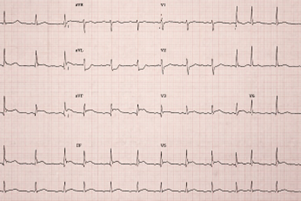
- Normal saline
- NTG
- Enoxaparin
- Streptokinase
- 60-year-old alcoholic man admitted with diagnosis of Pyelonephritis is having protracted vomiting and epigastric abdominal pain. ABG shows pH=7.3, pC02= 30 mm Hg and HCO3 =15 meq/L, Ketostix is 4+, RBS is 200 mg/dl. Which of the following is not to be used in this patient
- Insulin infusion @0.5 ml/kg/hour in normal saline
- 5% D in 0.45% normal saline
- Soda bicarbonate
- Potassium chloride 40meq/L in normal saline
- 70-year-old patient who has ROSC after CPR for 2 minutes and Defibrillation of 200 J biphasic. ABG shows pH=7.3, pCO2= 30 mm Hg and HCO3=10 meq/L. Diagnosis is?
- Metabolic acidosis uncompensated
- Partially compensated metabolic acidosis
- Metabolic acidosis with respiratory acidosis
- Fully compensated metabolic acidosis
- Which of the following steps can lead to errors while drawing blood sample for serum calcium?
- Make a tight fist and maintain arm tension during the draw
- Use of wide bore needle on 20 ml syringe
- Swabbing with isopropyl alcohol and not letting it dry
- Use of antecubital vein
- Normal anion gap metabolic acidosis is seen in which of the following
- Acute renal failure
- Chronic renal failure
- Acute gastroenteritis
- Glue sniffing
- During ABG sampling which of the following is a good nursing practise?
- Air bubbles from the syringe are not to be expelled
- Use of EDTA/ Citrated in syringe
- Place hand of client at an angle of 45 degrees of wrist flexion
- Sample processing within 1 hour in ice slurry
- A 3-year-old child is brought to the emergency department after accidentally ingesting kerosene at home. The child is coughing and has mild respiratory distress. As the nurse caring for this child, which of the following actions is contraindicated?
- Keep the child in upright position and monitor airway, breathing, circulation
- Prepare for gastric lavage using a wide-bore Ryle’s tube
- Administer humidified oxygen and monitor for aspiration pneumonia
- Keep suction equipment ready at the bedside
- q-SOFA (sequential organ failure assessment score) is used for assessment of which of the following?
- Sepsis
- SIRS
- Septic shock
- Multi organ failure
- Which of the following complications can occur immediately after multiple blood transfusions?
- Hypokalemia
- Hyperkalemia
- Hypocalcemia
- Metabolic acidosis
- 1,3
- 2,3
- 1,2,3
- 1,3,4
- 28-year-old mountaineer develops cough, breathlessness at rest, and pink frothy sputum after rapid ascent to 3,800 meters. On examination: SpO₂ is 70% on room air, pulse 120/min, and bilateral crackles are heard. Which of the following is the priority nursing intervention at your high-altitude nursing station?
- Encourage deep breathing exercises and ambulation
- Administer furosemide IV to reduce pulmonary oedema
- Use Gammow bag for resuscitation
- Restrict fluids strictly and give acetazolamide( Diamox)

- Elevated PCWP is seen in which of the following conditions
- ARDS
- Cor pulmonale
- Mitral stenosis
- Pulmonary artery hypertension
- Which of the following reflexes is not assessed for the diagnosis of brain death?
- Pupillary light reflex
- Corneal reflex
- Doll’s eye reflex (oculocephalic reflex)
- Cremasteric reflex
- Child of RHD with Mitral regurgitation is put on drug X. Which of the following drug X based on ECG findings?
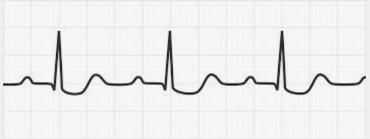
- Digoxin
- Furosemide
- ACEi
- Spirinolactone
- Osborn waves on ECG are seen in which of the following case scenarios
- Soldier in Thar desert due to heat exhaustion
- Lung cancer patient with hypercalcaemic crisis
- Post operative patient with extensive vomiting due to anaesthesia drugs
- Cold compresses used in bilateral ankle strain
- Which of the following is seen in patients with hypothyroidism
- Hypokalemia
- Hyperkalemia
- Hyponatremia
- Hypernatremia
- 30-year-old HIV positive patient has development of fast breathing and fever with cough. Auscultation shows bronchial breathing and dull percussion note in right inframammary and infra-axillary areas. CD4 count is 200 cells/ cu/mm/ Which organism is cause of this illness
- Pneumococcus
- Cryptococcus
- Pneumocystis Jiroveci
- Aspergillus
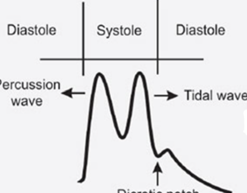
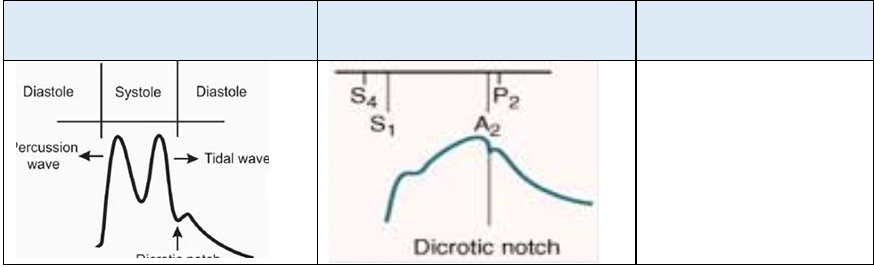
- You are taking care of a patient admitted with shortness of breath and pink frothy sputum. His pulse waveform is shown below. On examination apex beat is displaced lateral to mid clavicular line in fifth intercostal space. Nursing diagnosis is?
- Aortic stenosis
- Aortic regurgitation
- Mitral stenosis
- Mitral regurgitation
- Patient is admitted with pedal oedema and shortness of breath 3 days after developing a URTI. He is diagnosed with viral myocarditis and started on treatment in CCU. Which of the following drugs will not be useful for management of this patient
- Digoxin
- Furosemide
- Dobutamine
- Nesiritide
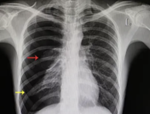
- Patient is admitted to ICU with shortness of breath. On admission RR 30/min with use of accessory muscles of respiration with Sao2 at room air of 85%. Which of the following is correct nursing assessment finding of this case?
- Wide bore needle insertion in 2nd intercostal space in mid clavicular line on left side
- Wide bore needle insertion in 5th intercostal space in mid axillary line on right side
- Hyper resonant percussion note with absent air entry and mediastinal shift to left side
- Hyper resonant percussion note with absent air entry and mediastinal shift to right side
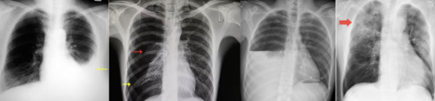
- Child is brought with complaints of squatting episodes with central cyanosis since one week of life. CXR is shown below. Which is correct about this condition
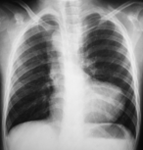
- L- R shunt
- R- L shunt
- Mixed shunt
- Obstructive lesion of Left ventricle
- Which is not correct about Brown Sequard syndrome?
- Ipsilateral loss of proprioception
- Contralateral loss of pain and temperature
- Contralateral Babinski sign
- Ipsilateral crude touch and pressure
- Which of the following is correct sequence of management of patient with autonomic dysreflexia due to spinal cord injury due to car crash?
- Sit patient upright- loosen clothing- check bladder and bowel- Start nifedipine
- Sit patient upright- Start nifedipine-loosen clothing- check bladder and bowel-
- Sit patient upright- loosen clothing- Start nifedipine- check bladder and bowel
- Sit patient upright- loosen clothing- check bladder and bowel- Start nifedipine
- 45-year-old man underwent total hip replacement surgery for Avascular necrosis of head of femur. 48 hours after surgery he develops chest pain with shortness of breath while the nurse is giving cefixime with clavulanic acid injection via drip. Auscultation shows a clear chest with conducted sounds and wide split S2. Which of the following is the best explanation for this presentation?
- Fat emboli that physically block pulmonary micro circulation
- Fat emboli causing production of cytokines that damage pulmonary microcirculation
- Acute cor-pulmonale due to pulmonary embolism
- Venous air embolism during peripheral venous access
- Young 20-year male presents with low backache and bilateral sacroiliitis. He tests HLAB27 Positive and takes one Tablet of etorocoxib daily. You will educate the patient about all except?
- Side effects of COX 1 and COX2 inhibitors
- Daily use of lumbar belt
- Avoid competitive sports to avoid risk of fracture of osteoporotic spine
- Avoid doing weights in the gym
- A 28-year-old female presents with drooping of eyelids and double vision that worsens by evening and improves after rest. She also reports difficulty chewing and speaking after prolonged activity. Work up shows anti Ach receptor antibody with improvement of weakness on injection Edrophonium. Which is not correct about this condition?
- Normal Deep tendon reflexes
- Diurnal variation of neuro symptoms
- Dysphagia due to reduced motility of esophageal smooth muscles
- Dysarthria due to weakness of muscles of phonation
- 30-year-old man presents with blood in stool off and on with tenesmus and weight loss. Correct about preparation of client for colonoscopy?
- Sodium phosphate enema evening before and on early morning of scheduled procedure
- Sodium phosphate enema evening before and at least 6 hours before procedure
- PEG solution in 2L water evening before and early morning of scheduled procedure
- PEG solution in 2L water evening before and 6 hours before the procedure
- You are giving dental precautions to patient with recent prosthetic heart surgery. Which of the following patient wills least risk of infective endocarditis?
- Patients with regurgitant lesion on right side of heart
- Patients with regurgitation lesion on left side of heart
- Patients with stenosis lesion on left side Atrio ventricular junction
- Patients with stenosis lesions on right side of Atrio ventricular junction
- Patient ran a half marathon and collapsed at the finish line. On admission he had feeble pulse with BP 90/60 mm Hg. He developed a seizure episode with frothing from mouth corners that was controlled with lorazepam. Labs show sodium 125 meq/L, K 3.4 meq/L , chloride 96 meq/L and serum calcium of 8.9 mg/dl. Which is correct about management of this patient?
- 3% Saline bolus 100 cc
- 3% Saline via infusion pump to correct over 24 hours
- 3% Saline via infusion pump to correct over 48 hours
- 3% saline via infusion pump to correct over 72 hours
- Euvolemic Hyponatremia is seen in which of the following?
- Hypothyroidism
- Congestive heart failure
- Ascites
- Diabetic nephropathy
- Which of the following medications has no role in management of crush injury admitted with labs of serum potassium 7.5 meq/L , Na =130 meq/L, Anion gap =16 meq/L and ABG showing pH 7.3, pCO2 = 30 mm Hg and HCO3=15 meq/L?
- Sodium polystyrene sulfonate
- Soda bicarbonate
- Calcium chloride
- Nebulization with beta 2 antagonist
- Patient is undergoing robotic total abdominal hysterectomy with bilateral salpingo-oophorectomy. Capnography tracing shows a sudden rise of ETCO2 value to 45 mm Hg. Which of the following complications is anticipated in this patient?
- Pulmonary thromboembolism
- Spontaneous extubation of patient
- Venous air embolism
- Malignant hyperthermia
- During dental extraction for wisdom tooth and young girl becomes unconscious and has a brief convulsion lasting for 15 seconds with passage of urine. Nursing diagnosis and priority nursing action is
- Vaso vagal syncope, raise feet of patient
- GCSE, time the episode and secure IV line
- Lignocaine toxicity and prepare for lipid emulsion infusion
- Pulseless electrical activity, Check BP of patient
- A patient presented with pain in multiple joints involving both the hands and knees for over 2 months of duration. Her investigations revealed elevated ESR and CRP with a negative rheumatoid factor assay. Her blood showed the presence of anti-CCP antibodies. Which of the following joints will likely be spared?
- PIP and MCP bilaterally
- PIP and wrist joint bilaterally
- DIP
- PIP, MCP and wrist joint bilaterally
- gravis patient presents with shortness of breath. Spo2 on room air is 90%. Which of the following indicates patient needs admission and support
- Single breath count < 15 per min
- Single breath count < 25 per min
- FEV1 less than 80%
- FEV1 less than 50%
- The following rhythm strip indicates which of the following defects?

- PSVT
- VT
- Premature ventricular contractions
- Sick sinus syndrome
- T2DM Patient is admitted with fever and dysuria. Urine m/e shows 100 pus cells/HPF and gram stain shows gram negative organisms. Urine culture report is awaited. Vitals shows pulse 100/min with BP 90/60 mm Hg. The nurse will plan for which of the priority action?
- Prepare Cefixime and clavulanic acid infusion after drawing 20 cc blood for culture
- Prepare Ceftriaxone bolus on orders after drawing 20 cc blood for culture
- Prepare for nor epinephrine infusion on orders
- Prepare for normal saline bolus on orders
- Patient is having breathing difficulty and stridor after massive blood transfusion. Vitals are pulse of 110/min with BP 120/80 mmHg with peripheral cyanosis and expiratory stridor. Which of the following complication is anticipated in this patient?
- Hypocalcemia
- TRALI
- TACO
- ARDS
- Which is not a nursing assessment finding in hypokalemia
- Ileus
- Areflexia
- Arrythmia
- Muscle excitability
- What is maximum concentration of potassium that can be safely administered in peripheral line
- 10 meq/L
- 20 meq/L
- 40 meq/L
- 80 meq/L
- Patient is admitted with diagnosis of tumor lysis syndrome. Which of the following is not seen in this condition?
- Hypocalcemia
- Hypokalemia
- Hyperphosphatemia
- Hyperuricemia
- Which of the following is responsible for pseudo-hyperkalemia?
- Thin bore needle for sampling
- Massive hemolysis in malaria
- Multiple blood transfusion
- Acute tubular necrosis
- Which of the following causes hyperkalemia
- Thiazides
- Conn syndrome
- First degree burns
- Aldosterone antagonists
- Which of the following causes High output cardiac failure?
- Mitral stenosis
- Tricuspid stenosis
- Anemia
- Atrial septal defect
- Which of the following is feature of left ventricular failure?
- Elevated JVP
- Crepitations
- Tachypnea
- Hepatomegaly
- Which congenital heart disease leads to heart failure?
- VSD
- Tetralogy of Fallot
- Dextrocardia
- Hypertension
- Which of the following tell you that your patient with heart failure on medication needs more education?
- Don’t eat Pickles/Achaar/ Chips
- Avoid coconut water if feeling weak in legs
- Daily record body weight
- Report if shortness of breath on going to bathroom
- Thiazides / Water pills in congestive heart failure act on
- Distal convoluted tubule
- Proximal convoluted tubule
- Ascending limb of loop of Henle
- Descending limb of Loop of Henle
- Which drug has no role in management of acute pulmonary edema?
- Lasix
- Morphine
- Nitroglycerin
- Beta blocker
- Which type of shock is seen in case of Cardiac tamponade?
- Hypovolemic
- Obstructive
- Distributive
- Septic
- Comment on heart rate in this ECG strip
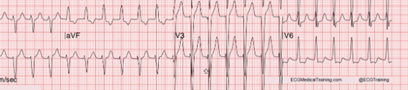
- 100/ min
- 150 / min
- 200 / min
- 250 / min
- Most dangerous dietary fat
- LDL
- HDL
- Trans fats
- Triglycerides
- Platypnea is defined as
- Shortness of breath in Supine position
- Shortness of breath in right lateral decubitus position
- Shortness of breath in sitting position
- Shortness of breath in left lateral decubitus position
- Which of the following is used for treatment of cardiac-arrest
- DC shock
- Balloon angioplasty
- Epinephrine
- Dopamine
- In a pulseless patient with cardiac arrest which route is used for giving adrenaline?
- Intra-muscular
- Intra-venous
- Intra-cardiac
- Intra-osseus
- Vitamin deficiency leading to heart failure?
- A
- B
- C
- D
- Blood test to diagnose heart failure?
- Troponin I
- Pro-BNP
- CPK MM
- CPK MB
- Largest state of India by surface area covered is
- Uttar Pradesh
- Madhya Pradesh
- Rajasthan
- Jammu and Kashmir
- Which complication of trans radial catheterization for Balloon angioplasty should be monitored by nurse in first 24 hours?
- Angina
- Artery occlusion
- Bleeding
- Artery perforation
- Client was admitted with food poisoning and repeated episodes of vomiting. Nurse gave Perinorm/ Metoclopramide. Now he is having Dystonia. Which of the following drugs will relieve his symptoms?
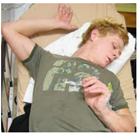
- Benazepril
- Haloperidol
- Benzodiazepines
- Diphenhydramine
- Mitral cells are present:
- Kidney
- Mitral valve
- Olfactory tract
- Optic nerve
- Ringer Lactate is contraindicated in:
- Severe liver disease
- Compensated shock
- Burns
- Bleeding oesophageal varices
- Which of the following is used for prophylaxis of acute post-operative endophthalmitis after cataract surgery?
- Pars plana vitrectomy
- Instillation of povidone iodine in conjunctival cul de sac
- Intra-viteal steroids
- Intra-viteal ceftazidime
- Which drug is used in the treatment of Thyroid storm?
- Levothyroxine sodium
- Liothyronine
- S.K.I
- Calcitonin
- Blood groups were first discovered by:
- Robert Koch
- Karl Landsteiner
- Paul Ehrlich
- Anton von Leuwenhoek
- The nurse is performing a neurological assessment on a client with CVA. Which finding if observed by the nurse would warrant immediate attention?
- Decrease in level of consciousness
- Loss of bladder control
- Altered sensation to stimuli
- Emotional liability
- A nurse enters a client’s room as relative is saying he is unresponsive. She finds patient has no pulse and respirations. After calling for help the first action the nurse should take is?
- Start peripheral IV
- Head tilt and Jaw lift
- Get AED and emergency equipment
- Intubate the patient
- Weber’s test is done to diagnose:
- Eye problem
- Hearing loss
- Respiratory problem
- Cardiac problem
- Fracture within the distal end of radius is known as:
- Colle’s fracture
- Pott’s fracture
- Edward’s fracture
- Which of the following gut is the most common location for Crohn’s disease?
- Descending colon
- Jejunum
- Sigmoid colon
- Terminal ileum
- Preparation of the client for occult blood examination is:
- Restrict Fluid intake to 1 L /day
- Meat less diet 48 hours prior to obtaining of specimen
- NPO for 12 hours prior to obtaining to specimen
- Increased fluid intake
- The nurse preparing to assist the physician to examine the client’s skin with a wood’s light should do which of the following:
- Obtain an informal consent
- Tell the client that the procedure is painless
- Shave the skin site
- Prepare a local anesthetic
- If breath sounds are only heard on the right side after intubation?
- Partially withdraw, ventilate for 30 seconds then try again
- The patient probably only has one lung the right
- You have intubated the stomach
- Pull out the tube back and reintubate
- Spinal anesthesia is given at:
- L2-L4
- L3-L4
- L5-L6
- L1-L2
- What is odynophagia?
- Difficulty in swallowing
- Pain during swallowing
- Unable to swallow
- Regurgitation
- How will a nurse teach breathing exercise for a patient with chronic bronchitis?
- Use chest breathing
- Use diaphragmatic breathing
- Use open mouth breathing
- Use deep inhalation breathing
- Which organ involvement should nurse be concerned while taking care of a patient with deep vein thrombosis?
- Lungs
- Liver
- Short Saphenous vein
- Great Saphneous vein
- Earliest feature of Vitamin A deficiency?
- Conjunctival xerosis
- Keratomalacia
- Corneal xerosis
- Fundus changes
- Hay’s test is the test for:
- Albumin
- Bile salts
- Ketones
- Bile pigments
- Which plasma is called universal donor plasma?
- A
- B
- AB
- O
- Which is commonly seen after giving multiple units of Whole blood transfusion?
- Metabolic acidosis
- Metabolic alkalosis
- Respiratory acidosis
- Respiratory alkalosis
- You are nursing officer and assisting in giving blood transfusion to grand multipara who develops PPH. Which of the following will be priority nursing intervention if patient develops transfusion reaction.
- Give acetaminophen and call transfusion medicine specialist
- Document in case file
- Keep iv Line patent with Normal Saline
- Immediately administer adrenaline and hydrocortisone
- Which of the following is leading cause of Transfusion associated hepatitis?
- Hepatitis B
- Hepatitis C
- HIV
- Hepatitis D
- Which premedication will be usually written in orders of physician before blood transfusion
- Acetaminophen and Diphenhydramine
- Acetaminophen and adrenaline
- Hydrocortisone and Adrenaline
- Hydrocortisone and Acetylsalicylic acid
- Which age group has least chances of transfusion reaction?
- Neonates
- 65 years
- Grand multipara
- Patient on steroids
- You are giving blood transfusion after proper ID verification in patient. Which is the leading complication that can develop?
- Febrile non hemolytic transfusion reaction
- Mismatched blood transfusion
- Anaphylaxis
- Circulatory overload
- Leading cause of Death after blood transfusion
- TRALI
- Sepsis
- Hypocalcemia
- Mismatched blood transfusion
- Storage temperature of platelets in blood bank is ___ oC
- 0
- 4
- Minus 4
- 20-24
- Rise of hematocrit after one unit of packed RBC = ____ %
- 1
- 2
- 3
- 4
- Patient complaints of flank pain and change in color of urine during Blood transfusion. Which of the following actions is not to be done
- Inform Physician
- Immediately stop Blood Transfusion
- Start IV Fluids
- Give injection Adrenaline and Hydrocortisone
- Exchange transfusion is done for prevention of
- Kernicterus
- Hemorrhagic disease of newborn
- Neonatal Hypothermia
- All of the above
- Indication for giving Fresh frozen plasma?
- Dengue hemorrhagic fever
- Warfarin toxicity
- Airway Burns
- Brain hemorrhage
- Shelf life of blood in blood bank
- 18 days
- 35 days
- 56 days
- 72 days
- Dr Abdul Kalam Island is located off the coast of which state?
- Odisha
- Andhra Pradesh
- Tamil Nadu
- Kerala
- After whole blood collection, centrifugation is done to yield Buffy coat later. This is used to produce?
- WBC
- Platelets
- Packed RBC
- Plasma
- Which of the following conditions will cause distributive shock?
- Electrocution
- Radioactivity exposure
- Water house friedschen syndrome
- Scorpion Bite
- Construction worker fell from a height of 15 feet due to lack of safety cable. Correct about acute spinal shock?
- Death due to dysrhythmias
- Methylprednisolone improves prognosis
- C-Spine injury leads to labile Blood pressure
- Vertical compression injury is most common type
- Calculate the initial fluid requirement for 50 kg man with 40% burns?
- 4L
- 8L
- 12L
- 16L
- A 30 lady after fire-works accident presented with burns from the neck down to the lower back. What will be the preferred sequence of treatment?
- First debridement then resuscitation then grafting
- First debridement then grafting and then resuscitation
- First resuscitation then grafting and then debridement
- First resuscitation then debridement and then grafting
- Which of the following is the best method for hair removal to avoid surgical site infection?
- Shaving site with razor the morning of operation
- Hair clippers inside the operation theatre
- Shaving site with a razor the night before operation
- Depilatory creams before the operation
- Which of the following is best for management of child with thalassemia major?
- Bone marrow biopsy
- Whole blood transfusion
- Fresh frozen plasma
- Bone marrow transplant
- Which of the following is called brittle bone disease?
- Osteoporosis
- Osteopetrosis
- Osteomalacia
- Osteogenesis imperfecta
- Which nerve is likely to be damaged in this fracture?
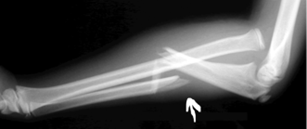
- Median nerve
- Posterior interosseus nerve
- Anterior interosseus nerve
- Radial nerve
- Which bone is marked here?
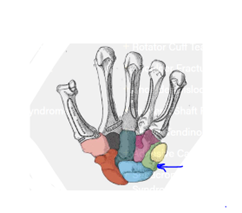
- Trapezoid
- Trapezium
- Triquetrum
- Pisiform
- The following instrument is used for
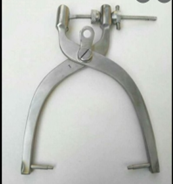
- Stabilize Skull fracture
- Stabilize C-spine injury
- Decapitation
- Decannulation
- The splint shown is called as
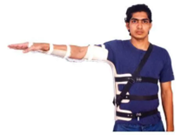
- Dennis brown
- Bohler braun
- Thomas
- Aeroplane
- Which nerve is injured in crutch palsy?
- Axillary
- Ulnar
- Median
- Radial
- 25-year-old construction worker with the following presentation. Diagnosis is?
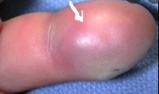
- Acute paronychia
- Tenosynovitis
- Dequervain tenosynovitis
- Felon
- 55-year-old post-menopausal lady fell in bathroom and develops inability to walk. Greater trochanter is elevated on injured side. Surgery is scheduled and you are assisting in the OT as lead Nurse. Which of the following implant is called Thompson implant?
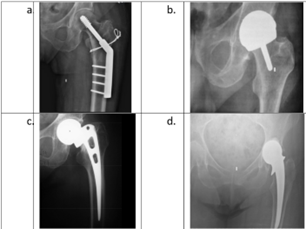
- Which drug used in osteoporosis is given once per year
- Risedronate
- Zolendronate
- Ibandronate
- Pamidronate
- Which is not correct about osteoporosis?
- Normal bone mineralization
- Reduced bone mass
- Normal SAP
- Type II osteoporosis is more common in females
- White line of calcification is seen in?
- Healing rickets
- Active rickets
- Hyperparathyroidism
- Hypoparathyroidism
- Metoprolol is contraindicated in
- Prinzmetal angina
- COPD
- Third degree heart block
- All of the above
- The following cylinder contains which gas
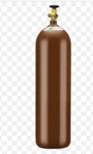
- Cyclopropane
- Entonox
- Helium
- Nitrous oxide
- Which of the following indicates effectiveness of resuscitation and return of spontaneous circulation?
- ETCO2 < 10 mm Hg at 20 min
- ET CO2 > 20 mm Hg at 20 min
- ABG p02 > 80 mm Hg at 20 min
- ABG pO2> 100 mm Hg at 20 min
- Which of the following indicates difficult intubation?
- Mallampati Criteria Class II
- Thyromental distance of > 6.5 cm
- Sternomental distance of < 12.5 cm
- Patient is able to protrude lower teeth beyond upper incisors