


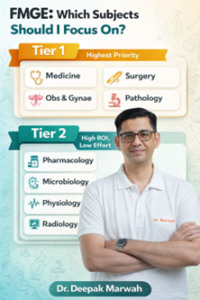
Figure: FMGE Tier 1 vs Tier 2 Subject Priority Infographic
Introduction: The Question Every FMGE Aspirant Asks
“Sir, there are 19 subjects… which ones actually help me pass FMGE?”
If you feel overwhelmed by the syllabus, you are not alone. Most students do not fail because they study less — they fail because they distribute effort equally across all subjects.
FMGE rewards smart prioritization, not random hard work. This guide explains exactly where to focus your energy to maximize your score.
Why Subject Prioritization Matters More Than Study Hours
The FMGE pattern is very clear:
Students stuck around 130–145 usually have knowledge — but their effort is spread across low-yield areas. The goal is strategic selection.
Tier 1 Subjects — Your FMGE Score Builders (Highest Priority)
These subjects form the foundation of passing scores. Build strength here first.
Medicine (Including Allied)
Medicine contributes heavily through integrated clinical questions.
Surgery
FMGE favors practical decision-making and visual recognition in surgery.
Obstetrics & Gynecology
One of the most predictable and scoring areas if revised properly.
Pathology
Pathology supports integration across many clinical questions.
Tier 2 Subjects — High ROI, Low Effort (Score Boosters)
Tier 2 subjects often decide the final 10–15 marks required to pass. They are concise and highly revisable.
Pharmacology
Focus on mechanisms, adverse effects, and clinical use patterns.
Microbiology
Regular rapid revision makes microbiology highly scoring.
Physiology
Though direct questions are fewer, physiology improves understanding across medicine and pathology.
Subjects Students Commonly Over-Focus On (And Lose Time)
Many aspirants lose productivity by spending excessive time on low-yield areas.
Remember: FMGE tests application more than isolated memory.
Dr. Marwah’s Practical Study Strategy
Phase 1: Build Core Strength
Spend your first major preparation phase mastering Tier 1 subjects.
Phase 2: Add Score Boosters
Quickly complete Tier 2 subjects to raise your score ceiling.
Phase 3: Final Revision
Use smaller subjects and images for last-mile score improvement and confidence building.
The Hidden Truth About FMGE Passers
Students who pass consistently do NOT know everything. Instead they:
Image-Based Questions: The Easy Marks Most Students Miss
FMGE increasingly includes images from:
Daily image practice can significantly improve scores without increasing study hours.
Suggested Last-Month Study Distribution
This distribution prevents burnout and maximizes retention.
Frequently Asked Questions
Which subject has the highest weightage in FMGE?
Medicine and allied disciplines generally contribute the largest share of integrated questions.
Can I pass FMGE by focusing only on big subjects?
No. Small subjects often provide the extra marks needed to cross the passing score.
How many subjects should I revise in the last month?
All subjects should be revised, but not equally. Use weighted prioritization.
Final Words From Dr. Marwah
Passing FMGE is not about studying endlessly. It is about direction, smart prioritization, and repeated revision.
Focus on high-yield subjects first, build confidence with image-based questions, and practice exam-like decision making.
Remember: the difference between failing and passing is often strategy — not intelligence.
Related Reading
Related Reading